
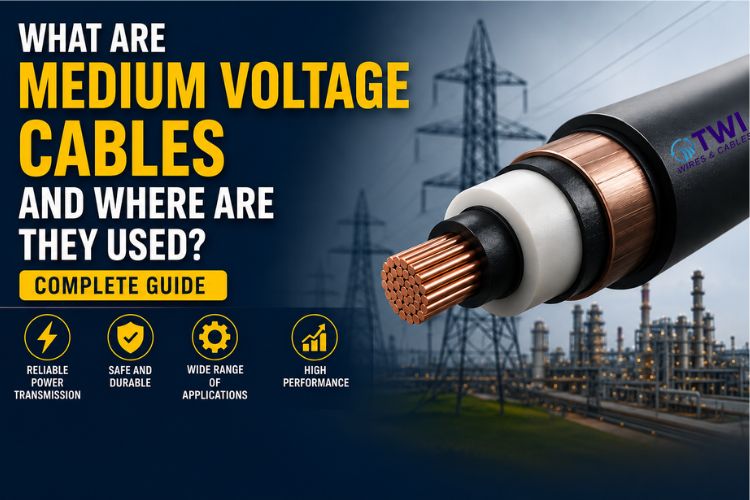

In today’s fast-growing industrial and infrastructure sectors, reliable power distribution plays a crucial role. This is where Medium Voltage Cables become essential. These cables are specially designed to transmit electrical power efficiently in medium-voltage applications, typically ranging from 1 kV to 35 kV. From industrial plants to renewable energy projects, medium voltage cable systems are widely used for safe and stable electricity transmission.
Understanding the features, applications, and Medium Voltage Cable Specifications can help businesses choose the right cable solution for long-term performance and safety.
What Are Medium Voltage Cables?
Medium Voltage Cables are electrical power cables designed for transmitting electricity at medium voltage levels. They are commonly used between power substations, transformers, industrial facilities, and commercial buildings. These cables are engineered with advanced insulation materials such as XLPE (Cross-Linked Polyethylene) to handle high electrical stress and environmental conditions.
A standard Medium Voltage Power Cable generally includes:
- Conductor (Copper or Aluminum)
- Insulation Layer
- Metallic Shield
- Bedding and Armoring
- Outer Protective Sheath
These layers work together to ensure durability, thermal resistance, and electrical safety.
Types of Medium Voltage Cables
Different industries require different cable designs based on installation conditions and power requirements. Some commonly used types include:
XLPE Insulated MV Cable
An MV Cable with XLPE insulation is widely preferred because of its high thermal resistance, low dielectric losses, and long service life.
Armored Medium Voltage Power Cable
These cables provide additional mechanical protection and are suitable for underground installations and harsh industrial environments.
Single-Core and Multi-Core Cables
Depending on voltage load and system configuration, industries may choose either single-core or multi-core medium voltage cable systems.
Medium Voltage Cable Specifications
Choosing the correct cable depends heavily on technical performance and operating conditions. Important Medium Voltage Cable Specifications include:
- Voltage Rating
- Conductor Material
- Insulation Type
- Current Carrying Capacity
- Temperature Resistance
- Armoring Type
- Flame Retardant Properties
Proper specifications ensure safe operation, reduced energy loss, and improved reliability. Industries should always purchase cables that meet international quality standards such as IEC, BS, or IS certifications.
Where Are Medium Voltage Cables Used?
The demand for Medium Voltage Cables continues to grow due to rapid industrialization and infrastructure development. These cables are commonly used in several sectors.
Industrial Plants
Manufacturing facilities require stable electrical distribution for heavy machinery and production systems. Medium voltage power distribution ensures uninterrupted operations.
Power Distribution Networks
Utility companies use Medium Voltage Power Cable systems to connect substations and distribute electricity across cities and towns.
Renewable Energy Projects
Solar farms and wind energy plants rely on MV Cable solutions for transmitting generated power efficiently to the grid.
Commercial Buildings and Infrastructure
Airports, metro stations, hospitals, and large commercial complexes use medium voltage cable networks for reliable power supply.
Mining and Oil Industries
Harsh operating environments in mining and oil sectors require heavy-duty armored medium voltage cables for safe power transmission.
Benefits of Using Medium Voltage Cables
Modern Medium Voltage Cables offer several advantages for industrial and commercial applications.
High Reliability
These cables are designed to operate efficiently under high electrical loads and challenging environmental conditions.
Better Safety
Advanced insulation and protective layers reduce the risk of electrical faults and short circuits.
Long Service Life
A high-quality Medium Voltage Power Cable can deliver reliable performance for decades with minimal maintenance.
Energy Efficiency
Properly designed cables reduce transmission losses and improve overall power system efficiency.
How to Choose Reliable Medium Voltage Cable Suppliers
Selecting trusted Medium Voltage Cable Suppliers is extremely important for ensuring product quality and long-term performance. Businesses should consider several factors before purchasing cables:
- Industry Certifications
- Manufacturing Standards
- Product Testing Facilities
- Technical Support
- Delivery Capability
- Experience in Large Projects
Experienced suppliers provide customized cable solutions based on voltage requirements, installation conditions, and project specifications.
Conclusion
As industries and infrastructure projects continue to expand, the need for dependable electrical distribution systems becomes more important than ever. Medium Voltage Cables play a key role in ensuring safe, efficient, and uninterrupted power transmission across various sectors.
From industrial facilities to renewable energy plants, choosing the right MV Cable with proper Medium Voltage Cable Specifications can significantly improve system performance and operational safety. Working with reliable Medium Voltage Cable Suppliers also ensures long-lasting quality and compliance with international standards.
Investing in the right medium voltage power cable solution not only enhances efficiency but also supports long-term business growth.
FAQs
1. What voltage range is considered medium voltage?
Medium voltage generally refers to electrical systems operating between 1 kV and 35 kV.
2. What is the difference between low voltage and medium voltage cables?
Low voltage cables are used for smaller electrical loads, while medium voltage cables are designed for higher power transmission and industrial applications.
3. Why is XLPE insulation used in MV Cable systems?
XLPE insulation offers excellent thermal resistance, electrical strength, moisture resistance, and longer cable life.