
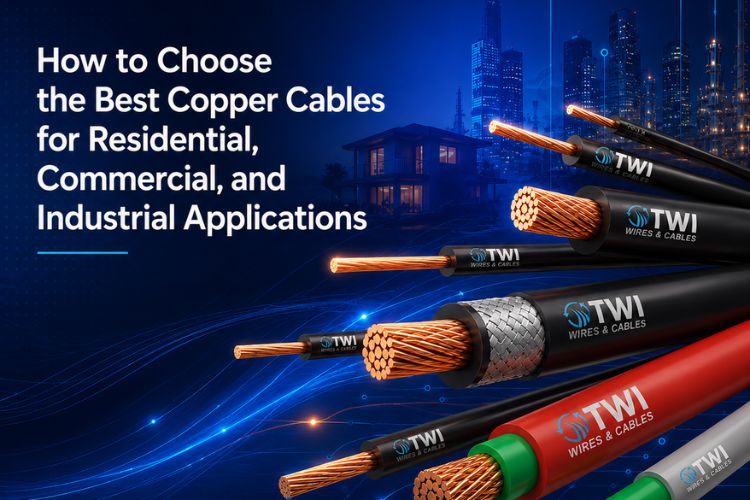

Electrical systems are only as reliable as the cables that power them. Whether you’re wiring a new home, developing a commercial property, or managing a large industrial facility, selecting the right copper cable plays a crucial role in ensuring safety, efficiency, and long-term performance.
With a wide variety of electrical cables available in the market, choosing the right one can sometimes feel overwhelming. Understanding the differences between cable types and their intended applications can help you make an informed decision while avoiding costly mistakes in the future.
At Tradewinds International, we work with clients across multiple industries and international markets, supplying high-quality electrical cables designed to meet demanding performance standards. In this guide, we’ll explore how to choose the right copper cable for your project.
Why Copper Cables Remain the Industry Standard
Copper continues to be the preferred conductor material worldwide due to its excellent electrical conductivity, durability, and flexibility. Compared to alternative materials, copper cables offer better current-carrying capacity and lower energy losses, making them suitable for both residential and industrial applications.
Some key advantages of copper cables include:
- High electrical conductivity
- Excellent mechanical strength
- Superior heat resistance
- Long service life
- Better flexibility for installation
- Reliable performance under heavy loads
These qualities make copper an ideal choice for modern electrical infrastructure.
Understanding Different Types of Copper Cables
Not every project requires the same type of cable. The right choice depends on factors such as voltage, environment, load requirements, and installation conditions.
Power Cables for Heavy-Duty Applications
Power cables are designed to transmit electrical energy safely and efficiently across longer distances. These cables are commonly used in industrial facilities, commercial buildings, power distribution networks, and large infrastructure projects.
Modern power cables often use XLPE insulation, which provides enhanced thermal stability, moisture resistance, and durability.
Typical applications include:
- Manufacturing plants
- Commercial complexes
- Utility infrastructure
- Distribution systems
Electrical Cables for Everyday Wiring
For homes, offices, and retail spaces, standard electrical cables are widely used for lighting circuits, switches, sockets, and electrical appliances.
These cables are designed to provide dependable performance while remaining cost-effective for general-purpose installations.
Common uses include:
- Residential buildings
- Office spaces
- Hotels and retail stores
- Interior electrical networks
XLPE Cables for High Performance
When projects demand higher operating temperatures and increased durability, XLPE cables become the preferred choice.
Cross-linked polyethylene insulation offers several benefits, including improved thermal performance, chemical resistance, and longer service life. These qualities make XLPE cables suitable for challenging industrial environments.
They are frequently used in:
- Industrial plants
- Renewable energy projects
- Underground power distribution
- Infrastructure developments
Flexible Cables for Dynamic Installations
Certain installations require cables that can bend repeatedly without damage. Flexible cables are specifically designed for such environments.
Manufactured using fine-stranded copper conductors, these cables provide greater flexibility while maintaining electrical performance.
They are commonly found in:
- Control panels
- Automated machinery
- Elevators and lifts
- Portable electrical equipment
Submersible Cables for Water Applications
Applications involving water require specially designed cables that can withstand moisture and continuous exposure to challenging environments.
Submersible cables are engineered to deliver reliable performance in water-based systems without compromising safety.
Typical applications include:
- Borewell pumps
- Irrigation systems
- Water treatment facilities
- Marine installations
Key Factors to Consider Before Choosing a Copper Cable
Selecting the right cable involves more than simply matching the conductor size.
1. Load Capacity and Voltage Requirements
Understanding the expected electrical load is essential. Undersized cables can lead to overheating, voltage drops, and reduced system efficiency.
Higher-load applications typically require larger conductor sizes and specialized insulation systems.
2. Installation Environment
Environmental conditions significantly impact cable performance.
Consider factors such as:
- Temperature
- Moisture exposure
- Chemical contact
- UV radiation
- Mechanical stress
For harsh environments, XLPE-insulated and industrial-grade cables are often the most suitable option.
3. Flexibility Requirements
If cables will be exposed to movement, vibration, or repeated bending, flexible copper cables should be selected to ensure long-term reliability.
4. Safety and Compliance Standards
Always choose cables that comply with recognized quality and safety standards. Certified products help reduce risks associated with electrical faults and fire hazards.
Look for compliance with relevant national and international standards whenever possible.
5. Project Type
Different sectors have different requirements:
Residential Projects
- House wiring
- Lighting circuits
- Electrical appliances
Commercial Projects
- Office buildings
- Shopping centres
- Hospitality projects
Industrial Projects
- Manufacturing facilities
- Heavy machinery
- Automation systems
- Power distribution networks
Matching the cable type to the application ensures better efficiency and longer service life.
Why Choose Tradewinds International?
Tradewinds International is committed to delivering high-quality electrical solutions for global markets. Our extensive product portfolio includes premium copper cables, electrical wires, power cables, flexible cables, and industrial wiring solutions designed to meet international quality standards.
With a strong focus on quality, reliability, and customer satisfaction, we serve contractors, distributors, importers, and project developers across multiple countries.
Our commitment to excellence ensures that every product is manufactured to deliver dependable performance, safety, and durability in demanding environments.
Conclusion
Choosing the right copper cable is an investment in the safety and efficiency of your electrical system. From residential homes to large industrial facilities, selecting the appropriate cable type ensures reliable power distribution, improved performance, and long-term peace of mind.
By understanding your project’s load requirements, environmental conditions, and installation needs, you can confidently select the best cable solution for your application. Partnering with a trusted supplier like Tradewinds International further ensures access to high-quality products that meet global standards and deliver consistent performance for years to come.