
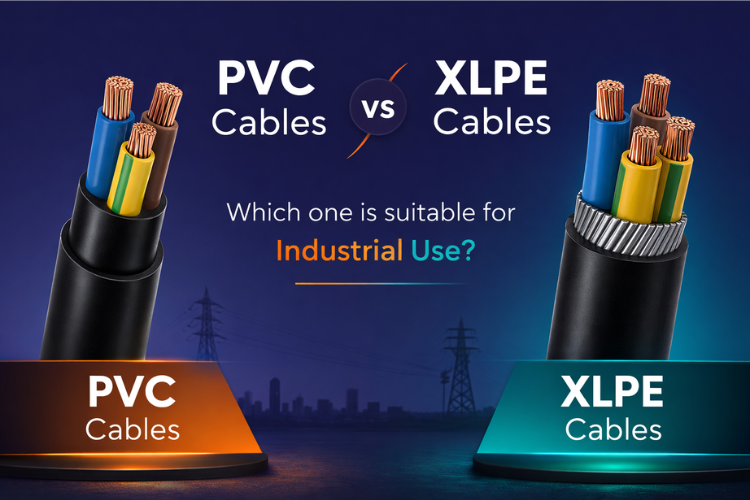

In modern industrial infrastructure, cables are no longer just basic electrical components. They play a crucial role in ensuring safety, efficiency, productivity, and long-term operational reliability. From manufacturing units and power distribution systems to water management and automation setups, the right cable selection directly influences performance and downtime. Among the most commonly used options, PVC insulated wires and XLPE cables are often compared by industrial buyers.
Understanding the differences between these two cable types is essential for selecting the right solution for industrial applications. While both have their advantages, their construction, performance capabilities, and ideal use cases differ significantly. This blog explores PVC and XLPE cables in detail to help industries make a smart and future-ready decision.
Understanding Industrial Cable Performance Requirements
Industrial environments demand cables that can perform reliably under challenging conditions. Electrical systems are often exposed to continuous loads, high temperatures, moisture, chemicals, and mechanical stress. Additionally, modern industries require XLPE electrical power cable solutions that reduce energy loss, control flexible cables for automation, and waterproof cable systems for moisture-prone areas.
Choosing the wrong cable can lead to overheating, insulation failure, frequent maintenance, and even safety risks. Therefore, understanding how PVC and XLPE cables behave under such conditions is critical for efficient electrical planning.
What Are PVC Cables and How Do They Perform?
PVC cables use Polyvinyl Chloride as their insulation and outer sheath material. They have been widely used across residential, commercial, and light industrial sectors for many years. As a commonly used product from a PVC insulated cable manufacturer, these cables offer reliable electrical insulation and flexibility.
In industrial settings, PVC cables are commonly used in control panels, machinery wiring, and control flexible cables where temperature conditions are moderate. Their flexibility allows easy routing in equipment and panels, particularly where frequent movement or bending is required. A reliable PVC insulated wire supplier can provide cables that also offer resistance to moisture and abrasion, making them suitable for indoor installations.
However, PVC has limited heat resistance. Under continuous high loads or elevated temperatures, the insulation may harden over time, affecting durability and performance. This limitation becomes significant in heavy industrial environments where cables are exposed to higher thermal stress.
What Makes XLPE Cables Different for Industrial Use?
XLPE cables use Cross-Linked Polyethylene insulation, which is specifically designed to enhance thermal, electrical, and mechanical performance. The cross-linking process makes the insulation more stable and durable under demanding conditions.
In industrial applications, XLPE power cables are widely preferred for power transmission involving higher current loads. These cables are typically produced by a specialized XLPE cable manufacturer to ensure consistent insulation quality and reliability.
Due to their durability, XLPE cables are extensively used in heavy industries, power plants, substations, and infrastructure projects where long-term reliability is essential.
Thermal Performance and Load Handling
A key difference between PVC and XLPE cables lies in their temperature handling capacity. PVC cables are suitable for lower operating temperatures, making them ideal for controlled environments. In contrast, XLPE cables can withstand higher continuous temperatures without compromising insulation quality.
For industrial power applications carrying heavy loads over long periods, XLPE cables provide better current capacity and reduce the risk of thermal damage. This makes them a safer and more efficient choice for demanding operations.
Moisture Resistance and Water-Based Applications
Industries such as agriculture, mining, water treatment, and infrastructure often operate in moisture-heavy environments. In such cases, cables must prevent water ingress to avoid failures. While PVC cables offer basic moisture resistance, XLPE cables provide superior protection against water penetration.
Waterproof cable solutions and submersible cables are especially important in pump systems, borewells, and drainage setups. XLPE-insulated submersible cables are designed to function efficiently even when fully submerged, ensuring uninterrupted power supply. This makes XLPE cables the preferred choice for water-exposed applications.
Durability, Lifespan, and Maintenance
Industrial buyers often focus on long-term value rather than just initial cost. Although PVC cables are more economical upfront, their insulation can degrade faster under heat and chemical exposure, leading to higher maintenance costs over time.
On the other hand, XLPE cables are built for longer service life. Their insulation remains stable even under harsh conditions, resulting in fewer failures and reduced downtime. For industries that prioritize reliability, XLPE cables offer a clear advantage.
Energy Efficiency and Electrical Reliability
Energy efficiency is becoming increasingly important in industrial operations. XLPE cables have lower dielectric losses compared to PVC cables, which helps reduce energy wastage during power transmission. This is particularly beneficial in large-scale industrial systems where cables operate continuously.
Additionally, well-insulated control flexible cables ensure stable signal transmission in automation systems, improving accuracy and overall equipment performance.
PVC vs XLPE: Choosing the Right Cable for Your Industry
PVC cables are a good choice for internal wiring, control applications, and environments with stable temperature conditions. They offer flexibility, easy installation, and cost-effectiveness for non-critical circuits.
XLPE cables, however, are more suitable for heavy-duty applications, high-load power transmission, outdoor installations, and moisture-prone environments. Their superior thermal resistance, durability, and moisture protection make them ideal for demanding industrial use.
Conclusion: Making the Right Industrial Cable Choice
Choosing between PVC and XLPE cables depends on application needs, operating conditions, and long-term performance goals. Both cable types have their place in industrial systems, but selecting the right one ensures safety, efficiency, and reliability.
For industries looking for high-quality power cables, durable waterproof cable solutions, reliable control flexible cables, and efficient submersible cables, partnering with a trusted manufacturer is essential. Tradewinds International offers a wide range of industrial cable solutions designed to meet global standards, ensuring dependable performance across various industrial applications.