
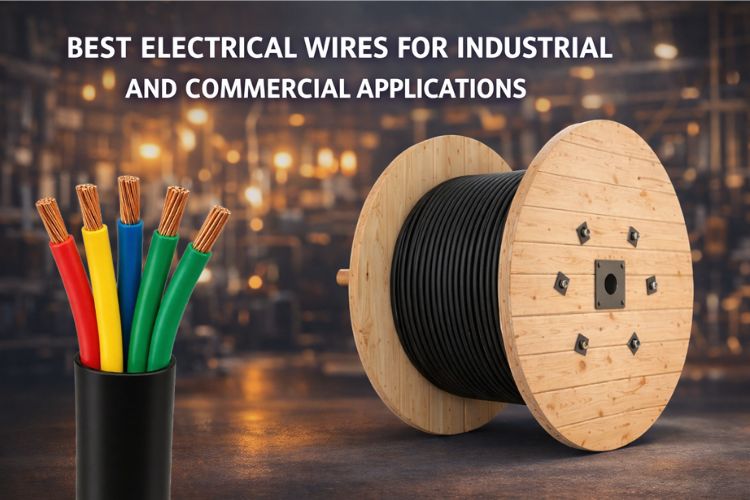

Why Choosing the Right Electrical Wire Matters for African Industrial & Commercial Projects
Industrial and commercial electrical infrastructure across Africa’s rapidly developing economies is operating under increasingly demanding conditions. From manufacturing plants in Nigeria and Egypt, to mining operations in South Africa, commercial hubs in Kenya, and infrastructure projects in Ghana, Tanzania, Ethiopia, and Ivory Coast, electrical systems must deliver continuous, safe, and efficient power.
Unlike residential wiring, industrial and commercial environments involve:
- Heavy-duty machinery and motors
- Long operational hours and high current loads
- Harsh temperatures, dust, humidity, and chemicals
- Strict fire and safety regulations
- Critical uptime requirements
Choosing the right type of electrical wire is not just a technical decision—it directly impacts safety, operational efficiency, energy loss, maintenance cost, and project lifespan.
As a trusted cable and wire manufacturer and exporter from India, Tradewinds International supplies TWI Wire and Cables designed to meet the requirements of African industrial and commercial markets.
Understanding Electrical Wires in Industrial and Commercial Environments
An electrical wire is a conductor designed to transmit electrical power safely and efficiently. In industrial and commercial applications, wires must:
- Carry higher electrical loads
- Withstand heat, moisture, and mechanical stress
- Operate continuously without degradation
- Comply with international and local safety standards
Industrial environments often include automation systems, control panels, power distribution boards, elevators, HVAC systems, generators, and backup power units. Incorrect wire selection can lead to overheating, insulation failure, power loss, equipment damage, or fire hazards—especially in high-growth African infrastructure projects.
Copper Electrical Wires: The Backbone of Reliable Power Systems
Copper remains the preferred conductor material for industrial and commercial electrical wiring worldwide. TWI Wire and Cables are manufactured using high-purity copper conductors that ensure excellent electrical conductivity, reduced energy loss, and long-term durability in demanding industrial environments.
Advantages of Copper Wires
- Excellent electrical conductivity
- Low resistance and minimal energy loss
- High mechanical strength
- Superior flexibility and durability
- Long service life with minimal maintenance
Copper wires are widely used in:
- Power distribution systems
- Industrial machinery
- Commercial buildings
- Control panels and automation systems
For African industries where reliability and efficiency are critical, copper wiring offers unmatched performance.
Heat Resistant Electrical Wires for High-Temperature African Conditions
Many African regions experience high ambient temperatures, especially in industrial zones, mining areas, and power plants. Heat resistant electrical wires are engineered for such demanding environments.
Applications of Heat Resistant Wires
- Industrial motors and generators
- Steel and cement plants
- Oil & gas facilities
- Manufacturing and processing units
- Power stations and substations
Special insulation materials prevent melting, cracking, and insulation breakdown, ensuring safe and stable performance even under continuous heat exposure.
Flame Retardant (FR) Wires for Commercial Buildings
Flame Retardant (FR) wires are designed to slow the spread of fire in case of electrical faults. While they do not eliminate fire risk entirely, they significantly reduce flame propagation, giving occupants more time to evacuate.
Common FR Wire Applications
- Office buildings
- Shopping malls
- Hotels and commercial complexes
- Educational institutions
- Control rooms and utility buildings
FR wires are widely specified in African commercial construction projects to meet safety and building code requirements.
HFFR Wires: Advanced Fire Safety for Critical Infrastructure
Halogen Free Flame Retardant (HFFR) wires provide next-level fire protection, making them ideal for modern African infrastructure projects.
Benefits of HFFR Wires
- Extremely low smoke emission
- No toxic halogen gases
- Improved visibility during emergencies
- Reduced risk to human life and equipment
Ideal Applications
- Hospitals and healthcare facilities
- Airports and railway stations
- Data centers and telecom hubs
- Metro projects and tunnels
- High-rise commercial buildings
As African cities expand vertically and technologically, HFFR wiring is becoming a standard requirement.
Control Wires for Automation and Industrial Systems
Automation is transforming industries across Africa, from manufacturing and mining to energy and logistics. Control wires play a vital role in transmitting signals accurately between devices.
Key Uses of Control Wires
- PLC and automation systems
- Control panels
- Sensors and instrumentation
- Industrial machinery
High-quality control wires ensure:
- Signal accuracy
- Minimal interference
- Reliable system operation
- Reduced downtime
Tradewinds International manufactures precision-engineered control wires suitable for modern African industrial automation.
Importance of High-Quality Insulation in African Conditions
In many African regions, electrical wiring must withstand:
- High humidity
- Dust and sand
- Chemicals and oils
- Mechanical abrasion
Low-quality insulation is a leading cause of electrical failures and fire incidents. Selecting the correct insulation—heat resistant, FR, or HFFR—is just as important as choosing the conductor.
High-grade insulation ensures:
- Longer service life
- Reduced maintenance
- Enhanced safety
- Stable performance
Electrical Wire Applications Across African Industries
Different sectors require specific wire types:
- Manufacturing plants: Copper wires with heat resistant or FR insulation
- Commercial buildings: FR and HFFR wires for lighting, power, and HVAC
- Hospitals & data centers: HFFR wires for life safety
- Mining & energy sectors: Heavy-duty heat resistant and armored cables
- Automation systems: High-quality control wires
Correct wire selection improves efficiency, safety, and cost control.
Compliance with African & International Electrical Standards
Electrical wires supplied to African markets must meet:
- Local regulatory requirements
- International safety standards
- Fire performance and insulation tests
- Electrical and mechanical durability norms
Using certified wires from a reliable exporter simplifies approvals, inspections, and long-term operations.
Why Choose Tradewinds International – Wire & Cable Exporter from India
At Tradewinds International, we focus on:
- High-purity copper conductors
- Precise conductor sizing
- Uniform insulation thickness
- Strict quality testing
- Export-ready packaging
As an experienced wire and cable exporter to Africa, we understand regional requirements and supply solutions tailored for industrial, commercial, and infrastructure projects.
Key Factors to Consider When Selecting Electrical Wires
Before finalizing electrical wiring, evaluate:
- Electrical load and voltage
- Operating temperature
- Fire safety requirements
- Environmental conditions
- Compliance standards
Proper planning ensures safe installations, reduced failures, and long-term reliability.
Future of Industrial and Commercial Wiring in Africa
With rising investments in:
- Infrastructure development
- Industrial automation
- Smart buildings
- Renewable energy
Africa’s demand for fire-safe, heat-resistant, and energy-efficient electrical wires is growing rapidly. Copper conductors and advanced insulation technologies will continue to dominate future projects.
Conclusion:
Building Safer & More Efficient Electrical Systems in Africa
Industrial and commercial electrical systems require robust and certified wiring solutions. With advanced insulation technologies and high-quality copper conductors, TWI Wire and Cables help build safer, more efficient, and long-lasting electrical infrastructure across Africa.
By choosing the right electrical wire and partnering with a trusted Indian manufacturer and exporter like Tradewinds International, African businesses can ensure safety, efficiency, and long-term performance.